
Latest News and Events
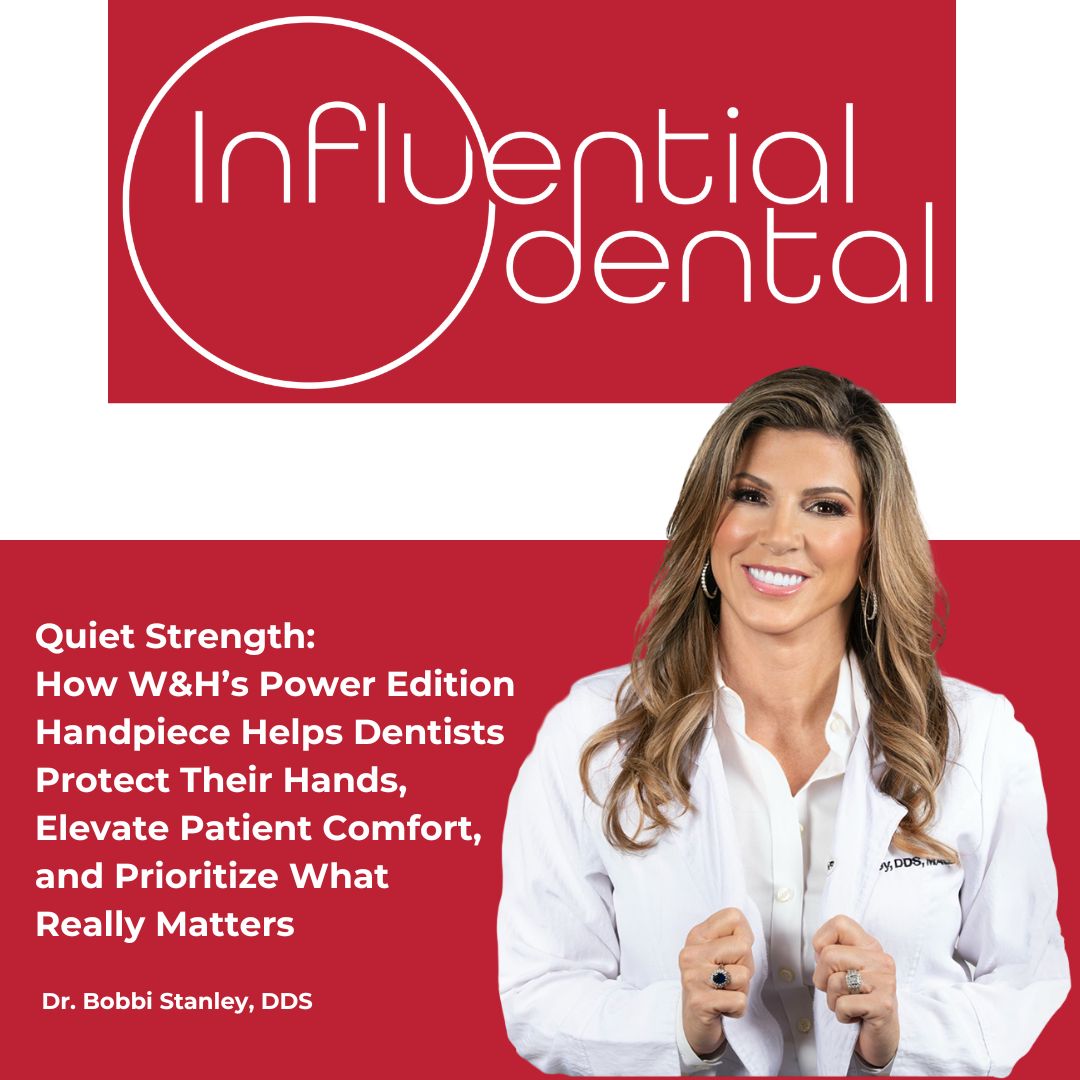
Quiet Strength: Dr. Bobbi Stanley on Protecting Dentists and Advancing Dentistry
We’re honored to share that Dr. Bobbi Stanley, DDS, co-founder of Stanley Institute, was recently featured in Influential Dentists Magazine in an article titled:
“Quiet Strength: How W&H’s Power Edition Handpiece Helps Dentists Protect Their Hands, Elevate Patient Comfort, and Prioritize What Really Matters.”
While the article highlights a specific piece of technology, the deeper message is much bigger than a handpiece.
It’s about the future of dentistry — and the sustainability of the clinicians behind it.
A Shift Our Profession Can’t Ignore
Dentistry continues to advance at a rapid pace. Digital workflows, guided surgery, zirconia, full-arch solutions — innovation is everywhere.
But there’s one area the profession hasn’t historically prioritized enough:
The physical wellbeing of the dentist.
After thousands of procedures, the cumulative effects of vibration, grip force, pressure, and posture become undeniable. Hand fatigue. Wrist strain. Joint stiffness. Early arthritis. These aren’t rare occurrences — they’re common career realities.
Dr. Stanley’s feature in Influential Dentists brings this issue to the forefront:
If we want longer, healthier, high-performing careers, ergonomics must become part of the clinical conversation.
Why This Conversation Matters Now
In the article, Dr. Stanley discusses how the W&H Power Edition handpiece supports:
- Reduced vibration and microstrain
- Minimal pressure requirements during cutting
- A noticeably quieter operatory environment
- Improved comfort during long restorative and implant procedures
But the true takeaway isn’t simply efficiency.
It’s sustainability.
When tools reduce physical strain:
- Dentists maintain precision longer
- Energy levels remain higher throughout the day
- Career longevity increases
- Patient experience improves
A calmer operatory leads to calmer patients.
A protected clinician leads to better dentistry.
This is the kind of systems thinking we emphasize at Stanley Institute — where clinical excellence and clinician wellbeing are not separate goals, but aligned priorities.
From Feature Article to Industry Movement
Being featured in Influential Dentists Magazine is an honor. But more importantly, it reflects something larger:
The profession is beginning to recognize that protecting the dentist is just as critical as advancing dentistry.
Technology should not only perform on the tooth.
It should protect the hands that perform the dentistry.
At Stanley Institute, we teach that smarter systems, better ergonomics, and intentional equipment choices are foundational to predictable outcomes, profitability, and personal longevity.
This article contributes to that broader shift.
Read the Full Feature
To explore Dr. Stanley’s full insights and the deeper discussion around ergonomics, patient comfort, and sustainable clinical performance, we invite you to read the complete article in Influential Dentists Magazine.
All blogs
WEBINAR: CARES Act-what you need to know
Drs. Robert & Bobbi Stanley have harnessed their experience and expertise gained from more than 25 years as small business owners to forge ahead in these unfamiliar times. In the midst of providing answers for their large dental team, they have worked tirelessly consulting banks and attorneys to understand what this means for their own practice and dentists across America.
In this update, Drs. Stanley review what is known about the CARES act so far and how experts are predicting it can impact dental small business owners. Topics include:
- Is my business eligible for relief?
- How much can I qualify for?
- How do I apply?
- How much will I need?
- WILL THIS LOAN BE 100% FORGIVEN?
- What are approved ways to use the money?
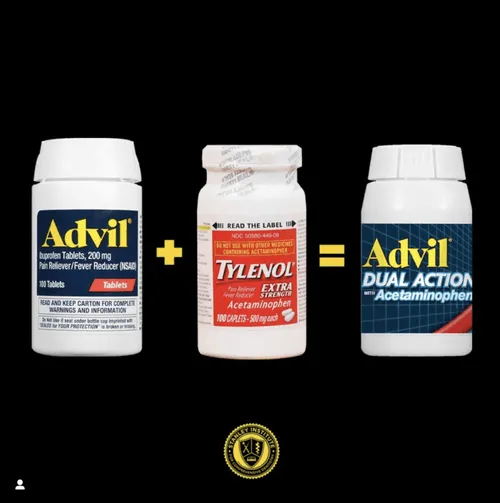
New Advil + Acetaminophen medication
For years, dentists have recommended combining ibuprofen (Advil) and acetaminophen (Tylenol) to safely enjoy the complementary pain relief benefits of both drugs. Earlier this year pharmaceutical maker, Glaxo Smith Kline (GSK) announced that the United States Food and Drug Administration (FDA) has approved their exclusive drug, Advil Dual Action with Acetaminophen for over-the-counter (OTC) use. This is the first ever, all-in-one product on the OTC market and the dental community is enthusiastic about the ease of use for patients.
Simplified medication protocol will hopefully yield more compliant patients and a reduced need to prescribe opioids. Based on data from multiple clinical studies, the new medication has been shown to achieve more thorough pain relief compared to the individual components taken separately. Additionally, studies show the advil + acetaminophen combination manages pain as effectively as narcotics.
Dr. Robert Stanley, a dentist in Cary NC and co-founder of Stanley Institute says, “The combination of the two medications is very effective. Advil Dual Action will help eliminate confusing directions for managing postoperative discomfort and makes discharge directions easier to follow. By complying more closely with doctor’s orders for pain relief, patients have a better overall dental experience. This is a great, safe addition to the dental arsenal.”

Best Dental Practices during COVID-19: A continuing discussion
In the midst of uncertainty, we must collect our thoughts and continue to move forward as healthcare providers and team leaders. In our previous webinar, we spoke with an employment attorney (link to webinar). Now, we are faced with navigating this evolving landscape. Drs. Robert & Bobbi Stanley have been in dentistry and small business ownership for more than 25 years. Although they, and many others have weathered employment issues, recessions, natural disasters and more, the COVID-19 pandemic is unprecedented. We must press ahead together and not be paralyzed with the fear of what may lie ahead.Join Drs. Stanley for a peer-to-peer forum and open discussion about navigating the unique challenges we face as dentists, business owners and Americans. The dental community has the opportunity to unite and persevere through this difficult landscape by continuing this collaborative conversation.
- Employment Law compliance—which one do I follow, Federal, state, local?
- Workplace Safety
- Anti-Discrimination-what does that mean for health screenings?
- Exempt vs Non-Exempt employees-what are my obligations?
- Paid sick leave
- FFCRA Sick Leave
- Workers Compensation
- Unemployment
- Top 5 practices for crisis response
- Small business loan-is that the right decision?
- How to create an action plan-for business-will I pay sick leave or vacation
- Action plan covid19 infection of patient or employee
- Emergency paid sick leave-who qualifies?

COVID-19 Town Hall for Dentists
Thank you to Lira Johnson, Employment & Labor Attorney & Partner at Dinsmore, as well as, Drs. Robert & Bobbi Stanley for a webinar plus question and answer session to help dentists navigate the coming weeks as business owners and clinicians. The following questions and more were addressed:
- What do I tell my team?
- How can I pay my team?
- What should I do with retirement while closed?
- What are my rights as an associate?
- What are options for team health insurance during closure?
- Do I pay out PTO?
- Can my employees get unemployment benefits?
- What is the difference between furlough, layoff and terminating employees?

The time to take action with your finances is now
As small business owners, we are faced with financial decisions on a regular basis. Now, more than ever, it is important to take action on some strong financial decisions. If you have bank loans, outstanding bills, credit card balances, etc., you need to put together a 6 –12 month action plan.
Analyze current obligations
The first step is to look at your loans. Banks are now giving three months of payment deferral. That means no payment AND no interest. If your bank has not offered that, you need to call and ask them. Some banks are not offering until they are asked. Your relationship with your banker is more important than ever. Reach out to them and let them know your situation. My banker at Pinnacle Financial reached out to me two weeks ago to let me know that she is here for me if I needed her. She and I have texted and emailed every day this week. Your banker is here to assist and now is the time to ask for help.
If you have credit card balances, your credit card company will work with you. Lenders are deferring late fees for 2-3 months. Call them right away and make payment arrangements if needed.
Establish a line of credit
It is also important to have a substantial line of credit available. Your line of credit should support your business for 3-6 months. If you have not established a good line of credit, call your bank on Monday morning and get the process going. Once the line of credit has been given, you should use your best judgement regarding drawing the cash and having it available in your checking account versus relying on the bank to have it when you need it.
Finally, call all of your suppliers and see if they will work with you on payments for outstanding bills. Ask for deferrals or payment options.
Everyone is in this together right now. We need to remember that CASH IS KING. We need to keep as much cash liquid as possible. This is not going to simply be a two to four week slow-down of our businesses. We need be ready for the long haul.
Dr. Bobbi Stanley has more advice to offer based on her 25+ years as a dentist and business owner and will be addressing subjects like, virtual consults, best use for the doctor’s free time and how to continue paying the team, in the coming days.
*This information should not be substituted for banking and legal advice from trained, financial and legal counselors.
Should I close my dental office or remain open?
These are uncertain times, to put it mildly. Never before have we been faced with decisions that are changing so quickly and drastically. Many dentists are unsure of what to do for their patients, their team and their office. Should you close your office as recommended or should you remain open?
It has been suggested that non-essential/elective treatment be stopped. What does that mean? In dentistry, we feel that all treatment is essential. Decay, periodontal disease, even cosmetic dentistry, can be deemed essential. The physical health of the patient (decay and periodontal disease) or mental health (cosmetic dentistry) is important. We do not want to diminish any of this. At the same time, the spread of the COVID-19 virus must be slowed for the sake of our healthcare system, and economy.
The question remains, should dentists open the practice or not? Dr. Bobbi Stanley, co-owner of Stanley Dentistry suggests putting a temporary strategy in place to take care of patients, while also protecting your team and their families. What does this look like?
Phones should stay open
Your phone team can answer any calls as well as make calls to inactive patients. This is the time to implement your reactivation protocol and reach out to all patient who have not been in the office for 18 months or greater. If you are uncertain on this protocol, contact us and we can assist.
Consider opening for limited hours
Consider opening with limited team members (one doctor, one assistant and one administrator). Schedule all emergencies, decay, broken teeth, etc. that are already on the schedule. You may want to consider scheduling hygiene for any periodontal patients during this limited time. In addition to the standard universal healthcare precautions, add more intense health and safety measures.
Your marketing team should be working full time. Marketing team members normally have isolated areas where they can work in the office away from patients and other team members. This is the perfect time to strategize about positioning yourself as the dental leader in your community.
Fluid approach
Dr. Stanley suggests the possibility of the aforementioned limited schedule for one week and a re-evaluation of the evolving situation at the end of the week. It has been suggested that dental offices close for three weeks. This limited schedule may be needed for three weeks. However, prudence suggests a wait and assess as events unfold.
Dr. Bobbi Stanley has more advice to offer based on her 25+ years as a dentist and business owner and will be addressing subjects like, virtual consults, best use for the doctor’s free time and how to continue paying the team, in the coming days.
Advance your dental
education today
If you're ready to take your dental practice to the next level, join us at one of our upcoming courses. We'll help you learn the tools you need to succeed!

Thank you to our industry partners